


Hugo Spritz: The Story Behind Italy's Favorite Summer Aperitivo
If you've had a spritz in the last few summers that wasn't orange, there's a good chance it was a Hugo. It's become the aperitivo people order specifically because it isn't Aperol — and it has a surprisingly recent, surprisingly specific origin story for a drink that now feels like it's always existed.
Invented on purpose, in one bar, in 2005
The Hugo wasn't handed down through generations of Italian aperitivo culture — it was invented in 2005 by Roland Gruber, a bar manager at the San Zeno Bar in Naturns, in Italy's South Tyrol. He built it as a deliberate alternative to the Spritz Veneziano (the Aperol or Campari version most people already knew), swapping the bitter orange base for something lighter and more floral. His first version used lemon balm syrup; elderflower syrup replaced it not long after, mostly because it was easier to find in bulk — and elderflower is the version that stuck.
Even the name has a slightly random origin: Gruber considered calling it "Otto" before landing on "Hugo," with no elaborate meaning behind the choice.
From one bar in the Alps to everywhere
What makes the Hugo's spread genuinely interesting is how fast it moved for a drink invented at a single bar. It caught on first across South Tyrol and the wider Triveneto region, then jumped the border into Austria, Switzerland, and Germany, picked up coverage from publications like Mixology magazine and Der Spiegel along the way. Within a few years it had gone from a bartender's alternative to Aperol Spritz to a fixture of Alpine and Central European summers — and eventually crossed the Atlantic as "the other spritz" American drinkers started asking for by name.
Why it caught on
Part of the appeal is simple: elderflower is lighter and more floral than bitter orange liqueur, mint adds a cooling note orange doesn't have, and the whole drink reads as fresher and slightly less "afternoon cocktail," more "the thing you order and then order again." It also gave bartenders (and hosts) a second spritz to offer, which matters more than it sounds — variety is most of what makes a drinks menu, or a home bar, feel considered instead of default.
The easier way to pour one
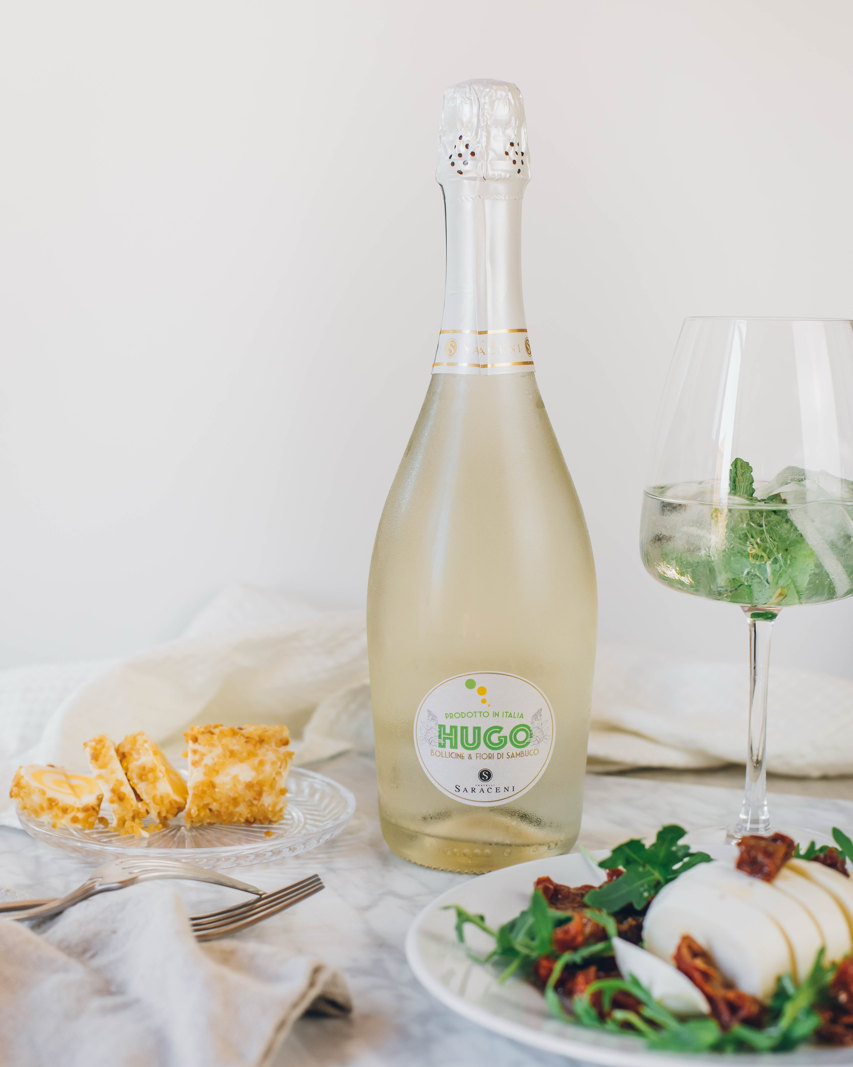
The classic build is prosecco, elderflower syrup, soda water, and mint, built over ice and stirred gently, roughly in a 3-2-1 ratio. It's not hard to make, but it is a build with four components to keep stocked and balance correctly every time — which is exactly the gap our own Hugo Spritz was made to close. It's the same idea in one bottle: chilled, poured, done, without measuring syrup or restocking mint before a dinner party. If you want the drink without turning your kitchen counter into a bar cart, that's the version to reach for.
Skip the syrup measuring — shop Hugo Spritz and pour the real thing straight from the bottle.