



Article: Is There Such a Thing as Blue Champagne?
Is There Such a Thing as Blue Champagne?
No — there is no such thing as blue Champagne. Champagne isn't a color or a style you can apply to any sparkling wine; it's a legally protected place name, tied to a specific region of France and a strict production code that spells out which grapes can be used, how the wine must be made, and what it can be called. Nothing blue is made there, and nothing blue is legally entitled to wear the name — no matter how a search result, a product label, or a headline makes it look.
Why "Blue Champagne" Can't Legally Exist
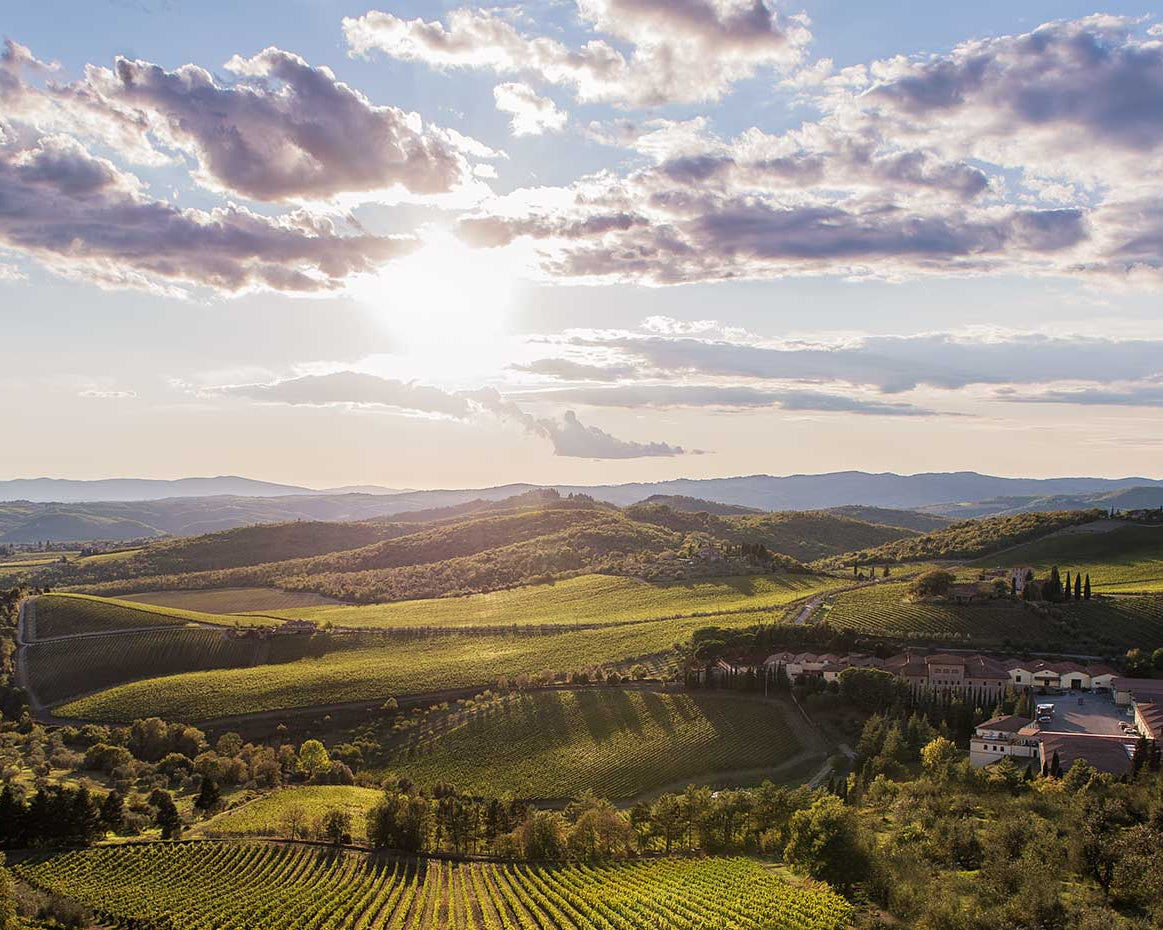
Champagne is an Appellation d'Origine Protégée (AOP) — a protected designation of origin, the same legal category that governs names like Roquefort or Parmigiano Reggiano. The name is only allowed on sparkling wine grown and made inside a defined region of northeastern France, under a detailed cahier des charges (production code) enforced by the Comité Champagne. That code limits the approved grape varieties — mainly Chardonnay, Pinot Noir and Pinot Meunier — sets the production method, and controls yields, aging and labeling. The Comité Champagne has a long, well-documented history of pursuing producers and brands anywhere in the world who use "Champagne" on something that doesn't meet that standard, whether it's a American sparkling wine, a cocktail, or — increasingly — a wine that happens to be blue.
Put simply: a wine can't call itself Champagne unless it's grown and produced in Champagne, under Champagne's rules. Since no blue wine is made there, "blue Champagne" isn't a hidden or rare style waiting to be discovered — it's a name that isn't available to use, in the same way "Blue Prosecco" would misuse Italy's own protected designation for sparkling wine from the Prosecco region.
What Actually Exists: Champagne Houses With "Blue" in the Name
A handful of real, legitimate Champagne houses do use the word "blue" on a label — and that's exactly where the confusion online tends to start. Pommery's Royal Blue Sky and Besserat de Bellefon's Bleu Brut are genuine appellation Champagne, made in the region under the rules above. Neither one is a blue wine. Open the bottle and you'll find the same pale straw-to-gold color Champagne has always had — "blue" refers to the packaging or the name, not what's in the glass. Search engines and shoppers scanning quickly can easily conflate a blue label with a blue liquid, which is part of how the idea of "blue Champagne" ends up circulating even though the product doesn't exist.
Blue Sparkling Wine Is a Real Category — and Saraceni Created It
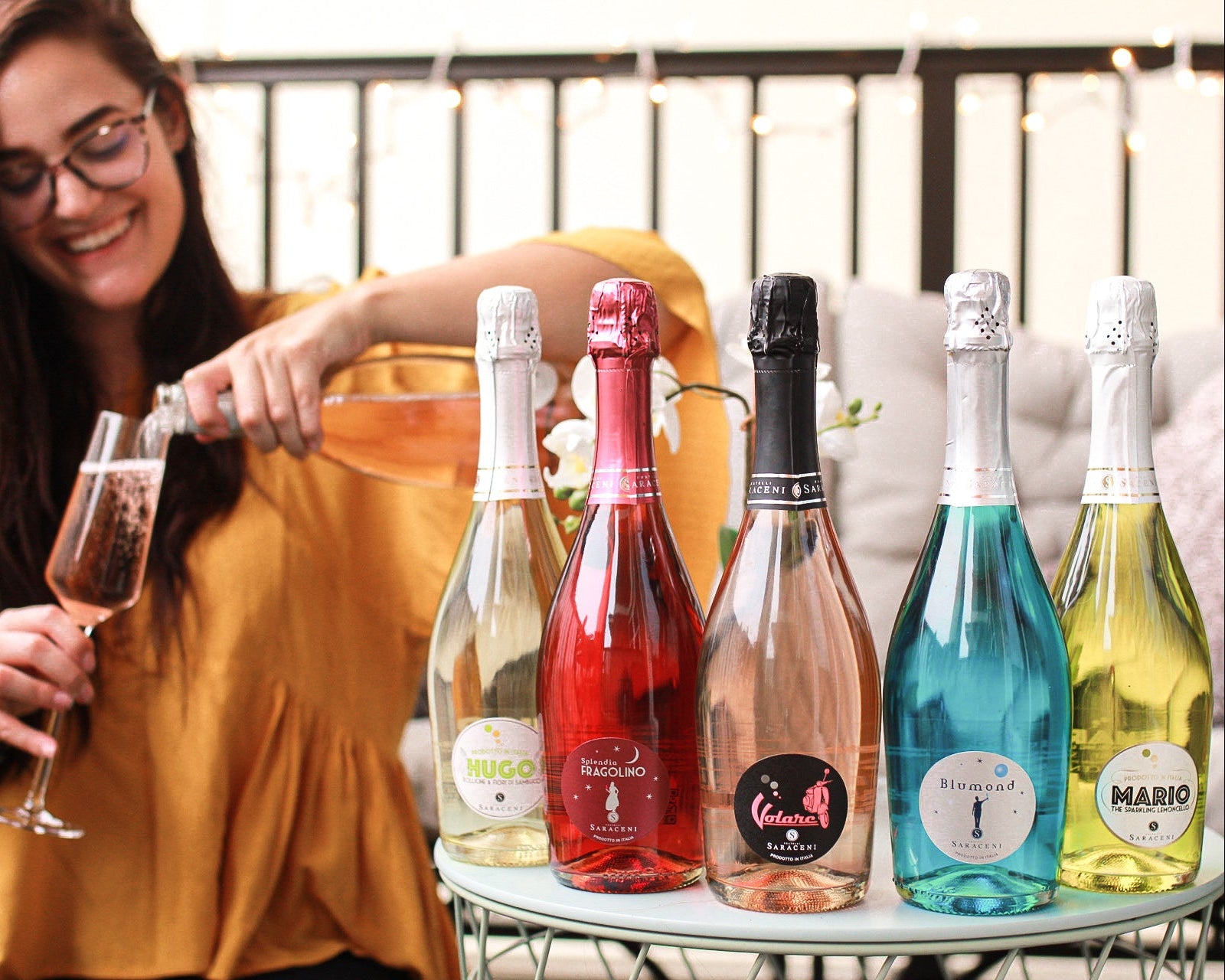
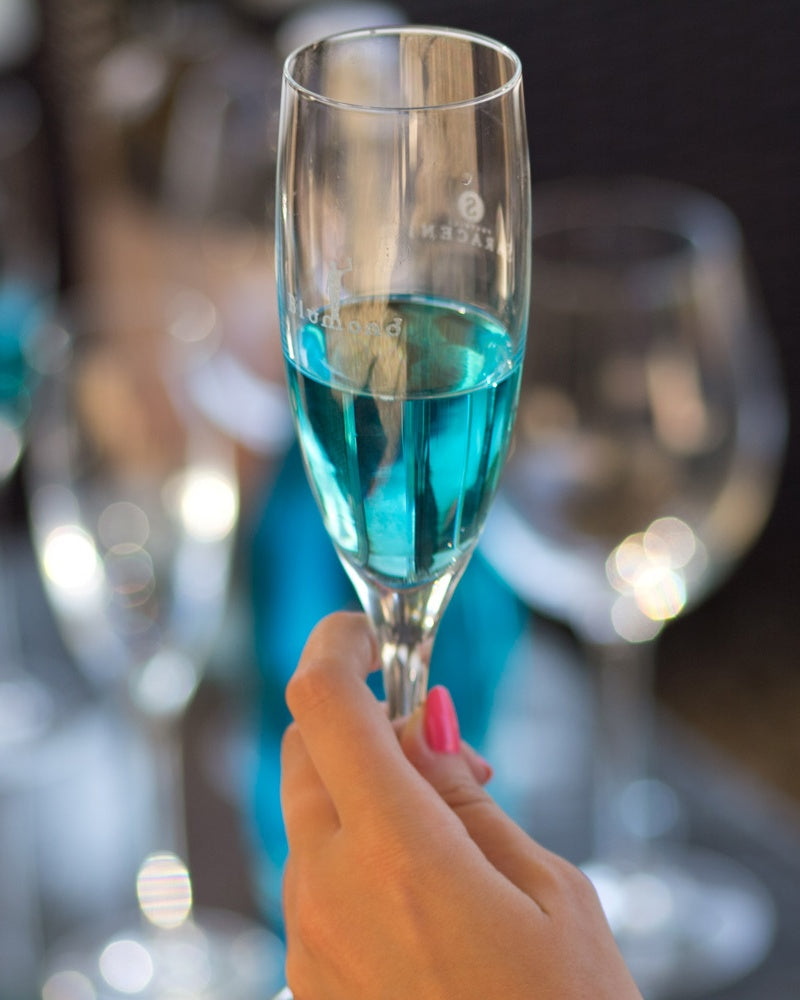
The wine that actually is blue is a different category altogether: sparkling wine colored naturally, typically through the use of the grape-derived pigment anthocyanin, with no dye involved. It's a real, relatively young style, and it isn't from Champagne, France — it isn't French at all. Blumond entered the market in 2011 as the original blue sparkling wine, well before "blue wine" existed as a search term or a trend anyone could ride.
That timing matters, because most of the "blue wine" and "blue Champagne" names showing up in searches today didn't arrive until 2017 or later — well after Blumond had already been covered by Marie Claire, Cosmopolitan, Refinery29, Elite Daily, Fast Company, HuffPost, Food & Wine, Tasting Table, Mashable and Thrillist in a single wave of national press in May 2017. That coverage is a large part of what put "blue wine" on the map as a searchable idea in the first place. Later entrants built on a category Blumond had already created; they didn't discover something new. Interestingly, even that early press covered Blumond as "blue Prosecco" — never "blue Champagne" — a distinction worth noting, since Saraceni Wines itself doesn't use "Prosecco" to describe wines that aren't genuine Prosecco either.
Why This Is Worth Getting Right
Calling a product "blue Champagne" — whether directly on a label or indirectly, through content built to rank for the term — isn't just imprecise, it's a name the law doesn't allow a non-Champagne producer to claim, protected the same way "Champagne" itself is. A brand that leans into that phrase, deliberately or not, is standing on legally unstable ground. For anyone shopping by search result rather than by label, the simplest way to tell the difference is the one that matters most: real Champagne — blue-named or not — is never blue in the glass. If it's blue, it isn't Champagne. It's a different category, one Blumond has been part of — and first to — since 2011.
Curious what actually makes a wine blue? Read the full story behind Blumond's color, or shop the original blue sparkling wine and taste the difference for yourself.