


Chianti vs. Chianti Classico: What's Actually the Difference?
Chianti and Chianti Classico are both DOCG wines made mostly from Sangiovese, from overlapping parts of Tuscany — but they are legally distinct denominations, run by different rules and a different producer consortium, not two grades of the same wine.
Two different zones, not two grades of the same zone
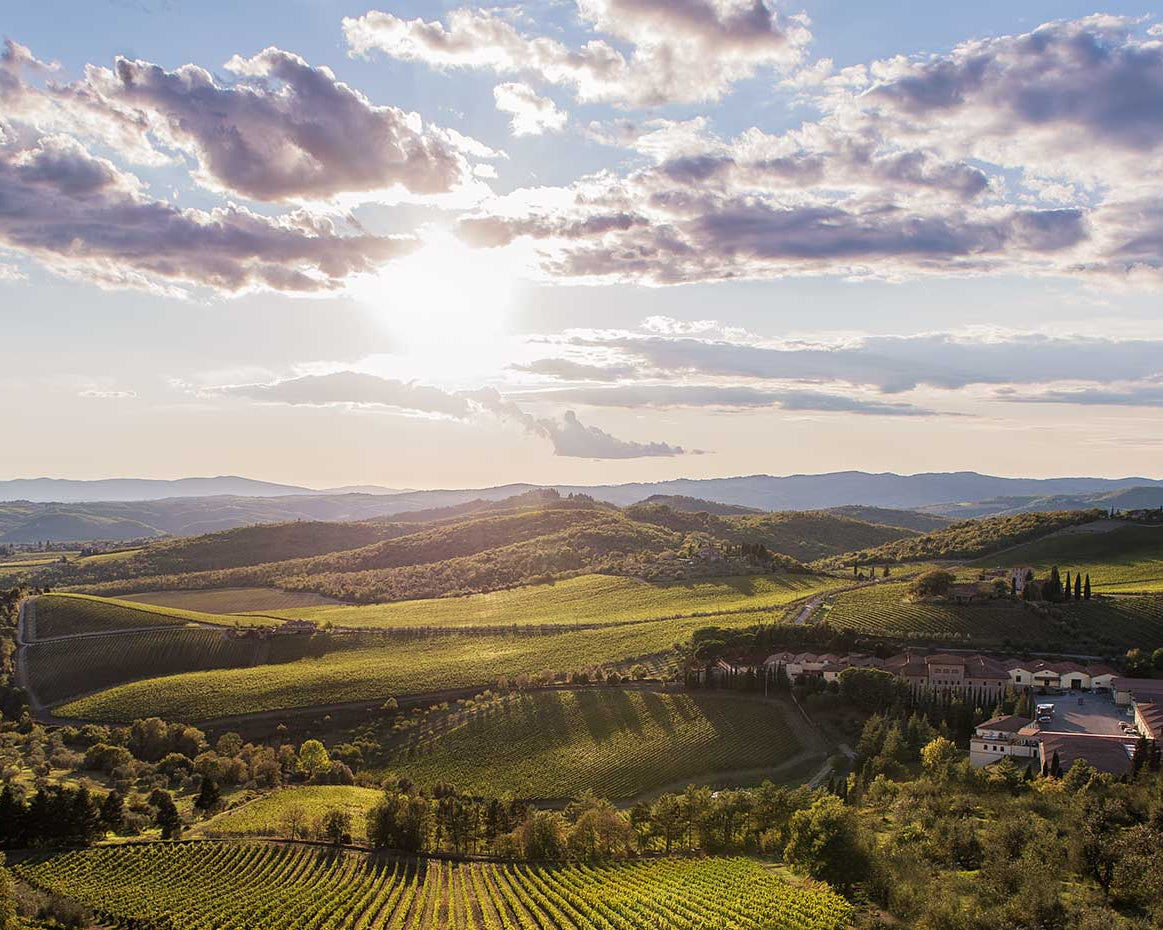
Chianti DOCG covers a broad area of roughly 15,500 hectares, split into seven sub-zones — Colli Fiorentini, Rufina, Colli Aretini, Colli Senesi, Colline Pisane, Montespertoli, and Montalbano. Chianti Classico DOCG is the smaller, older historic heartland between Florence and Siena, around 6,800 hectares, sitting higher at 250 to 600 meters elevation. It isn't a subset ranked above Chianti so much as an entirely separate, older denomination that predates the broader zone's later expansion.
The grape math is different too
Chianti DOCG requires a minimum of 70% Sangiovese, with up to 15% Cabernet Sauvignon or Cabernet Franc and up to 10% white grapes allowed in the blend. Chianti Classico DOCG requires at least 80% Sangiovese and permits no white grapes at all — and starting in 2027, its top Gran Selezione tier will require at least 90% Sangiovese. More Sangiovese, tighter rules, less room for anything else.
The rooster on the label isn't decoration
The Gallo Nero — the Black Rooster — appears exclusively on Chianti Classico bottles, marking membership in the Chianti Classico Consortium. A regular Chianti bottle never carries it, which makes it the fastest way to tell the two apart on a shelf without reading a word of fine print.
Riserva and Gran Selezione, briefly
Within Chianti Classico, there are three tiers: Annata (minimum 12 months aging), Riserva (minimum 24 months total, at least 3 in bottle), and Gran Selezione (minimum 30 months, at least 3 in bottle, estate-grown grapes only). None of these tiers work quite the same way inside regular Chianti DOCG.
Where Libero fits
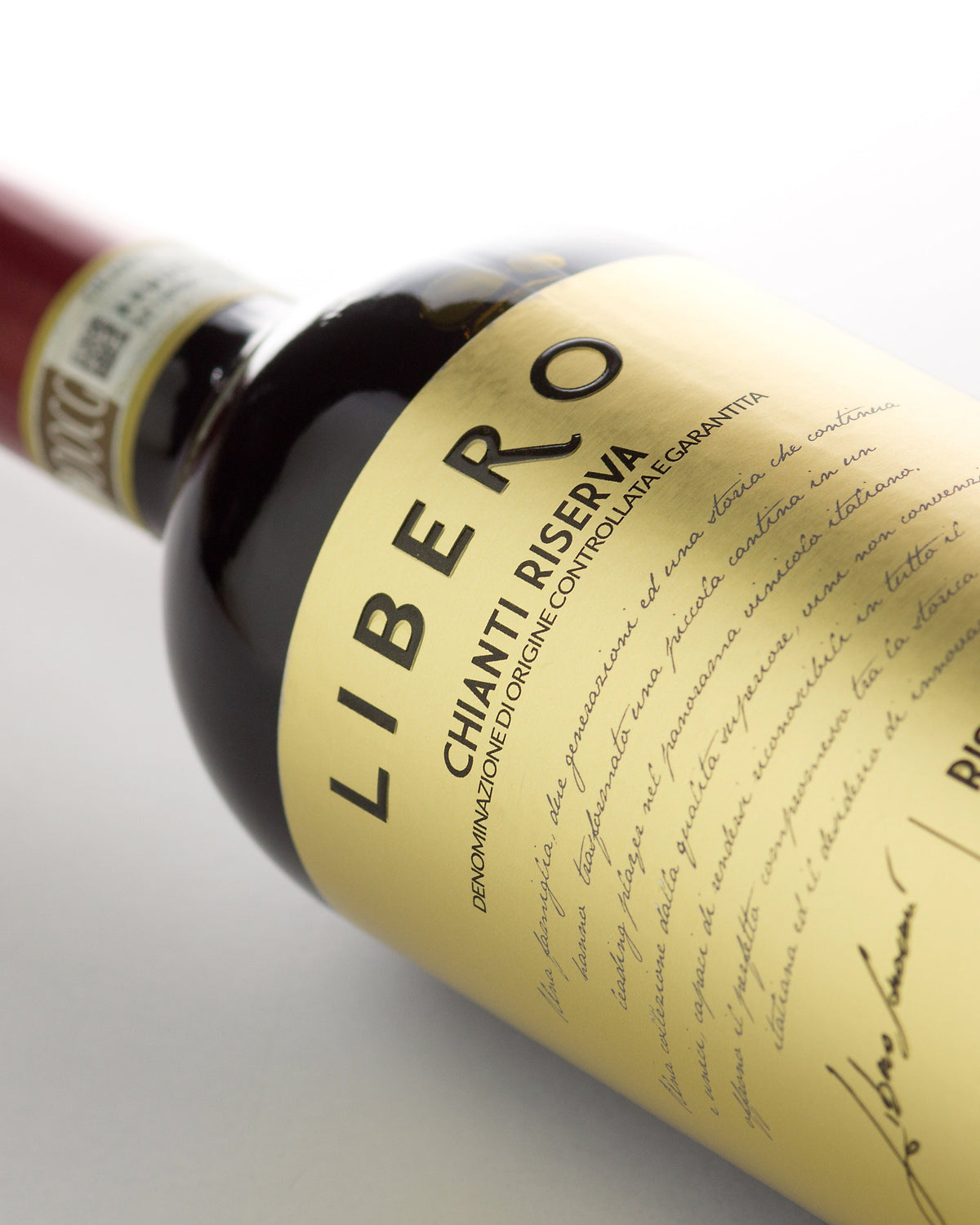
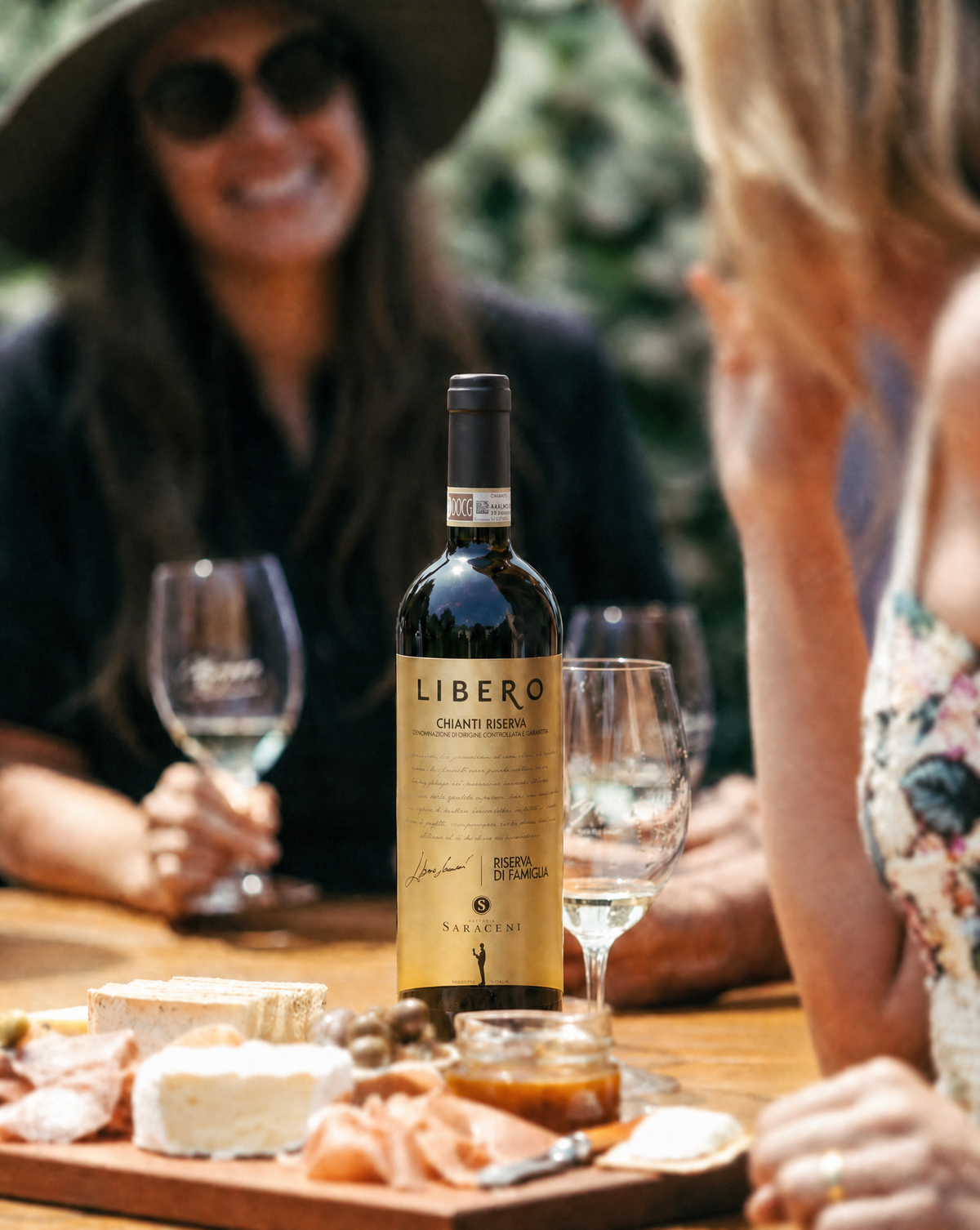
Our Libero Chianti is a Chianti DOCG — built to be the easy, everyday side of the category rather than a special-occasion Classico. If you want to see what an aging-focused tier tastes like in the glass, Libero Riserva di Famiglia is the bottle to open when the occasion calls for something with more time behind it than a weekday pour.
Compare them yourself — Libero Chianti and Libero Riserva di Famiglia.