


How to Read an Italian Wine Label (No Sommelier Required)
An Italian wine label is mostly three things: a quality classification (DOCG, DOC, or IGT), a set of legally required facts about the wine, and a producer's own branding on top of both. Here's what each part actually means, without needing a course to get through it.
The three-letter codes, decoded
DOCG — Denominazione di Origine Controllata e Garantita — is the highest quality tier, with the strictest production rules. Every DOCG bottle carries a uniquely numbered government seal across the neck, pink for red wines and green for white, which is literally a numbered guarantee tied to that specific bottle. DOC — Denominazione di Origine Controllata — covers more than 330 regulated zones across Italy, with strict rules but one tier below DOCG. IGT — Indicazione Geografica Tipica — is broader and more flexible, and is often used by producers making a wine in a more international style, outside the traditional regional recipe for that area.
What else has to be on the bottle
Beyond the classification, every bottle legally carries a vintage (the harvest year), the alcohol by volume, the name and address of the producer or bottler, the volume of wine inside, an appellation tying it to a place, and a sulfites statement where applicable. None of that is unique to Italy — it's standard across the EU.
What none of this tells you
The classification tier describes how strictly a wine is regulated, not whether you'll actually like it. A well-made IGT can be a genuinely ambitious wine, built outside a legacy rulebook on purpose rather than by accident. Read the label for what it actually is — provenance and rules — not a scorecard telling you what to buy.
What our own labels carry
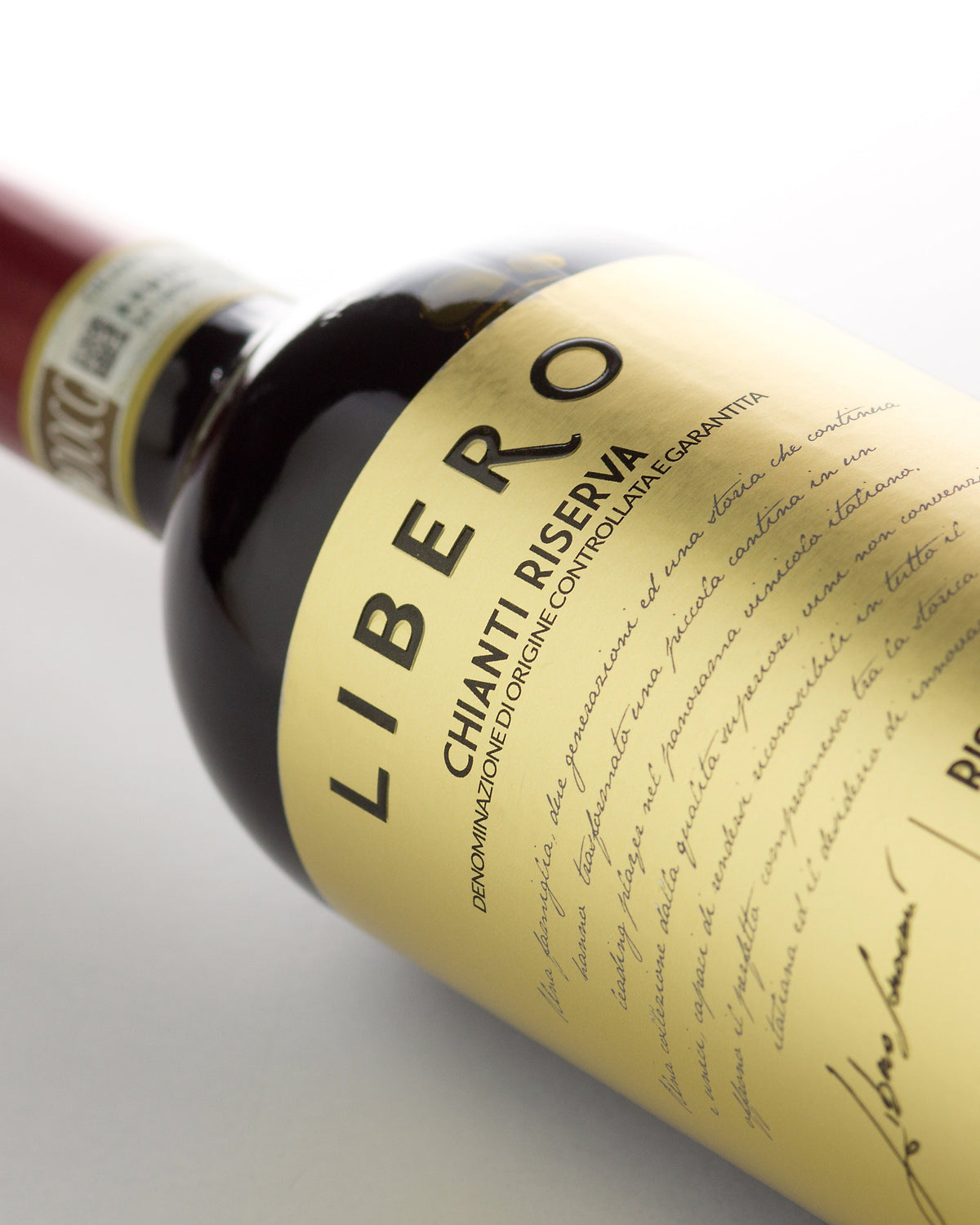
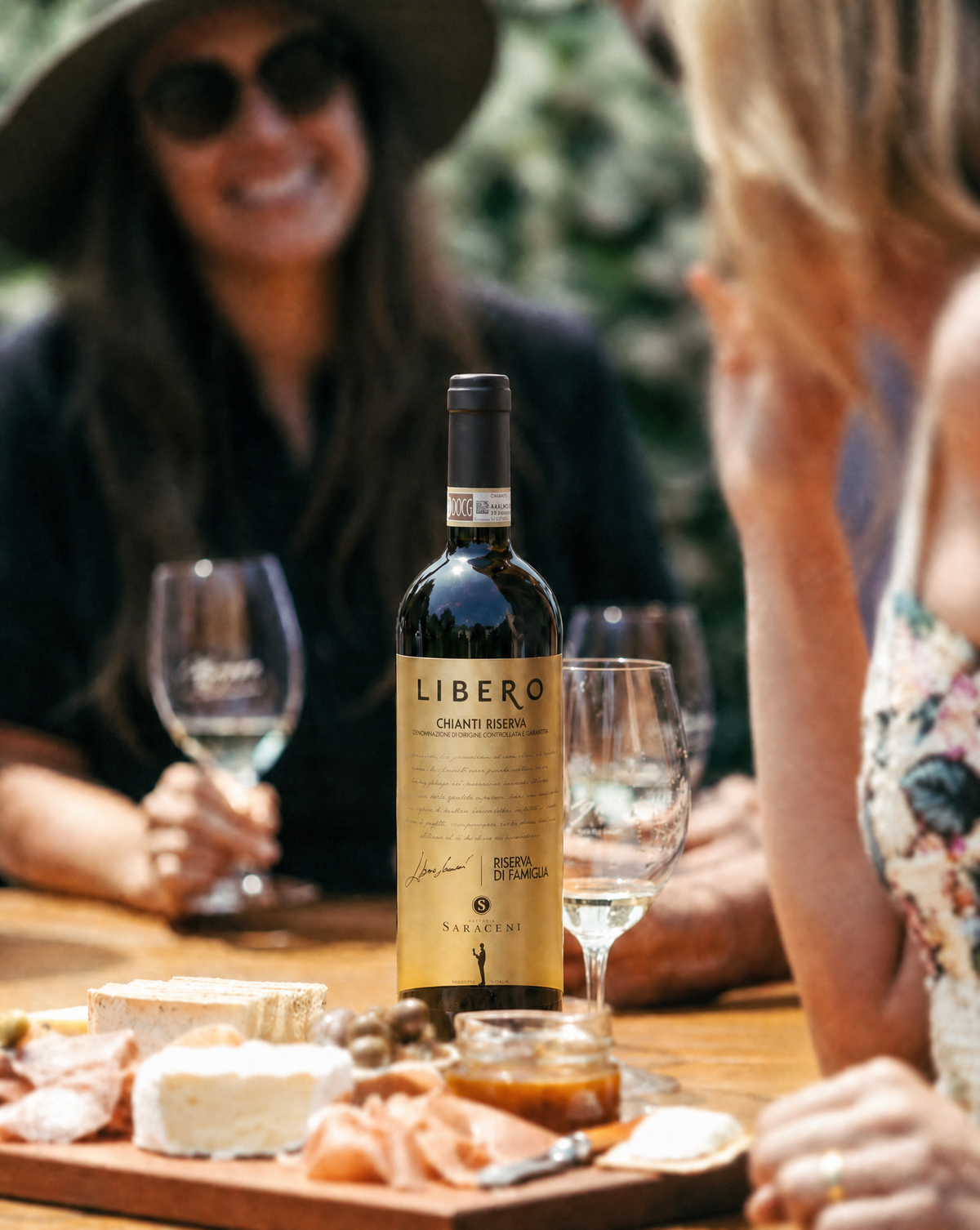
Both Libero Chianti and Libero Riserva di Famiglia are DOCG — the strictest tier, seal and all. We put that information on the label because you're entitled to it, not so you have to decode it before you're allowed to open the bottle. Taste first, jargon last, even on the label itself.
See it on the bottle — explore the Libero collection.
,%20a%20set%20of%20legally%20required%20facts%20about%20the%20wine,%20and%20a%20producer's%20own%20branding%20on%20top%20of%20both.%20Here's%20what...)